Why I Build Software That Solves Real Problems
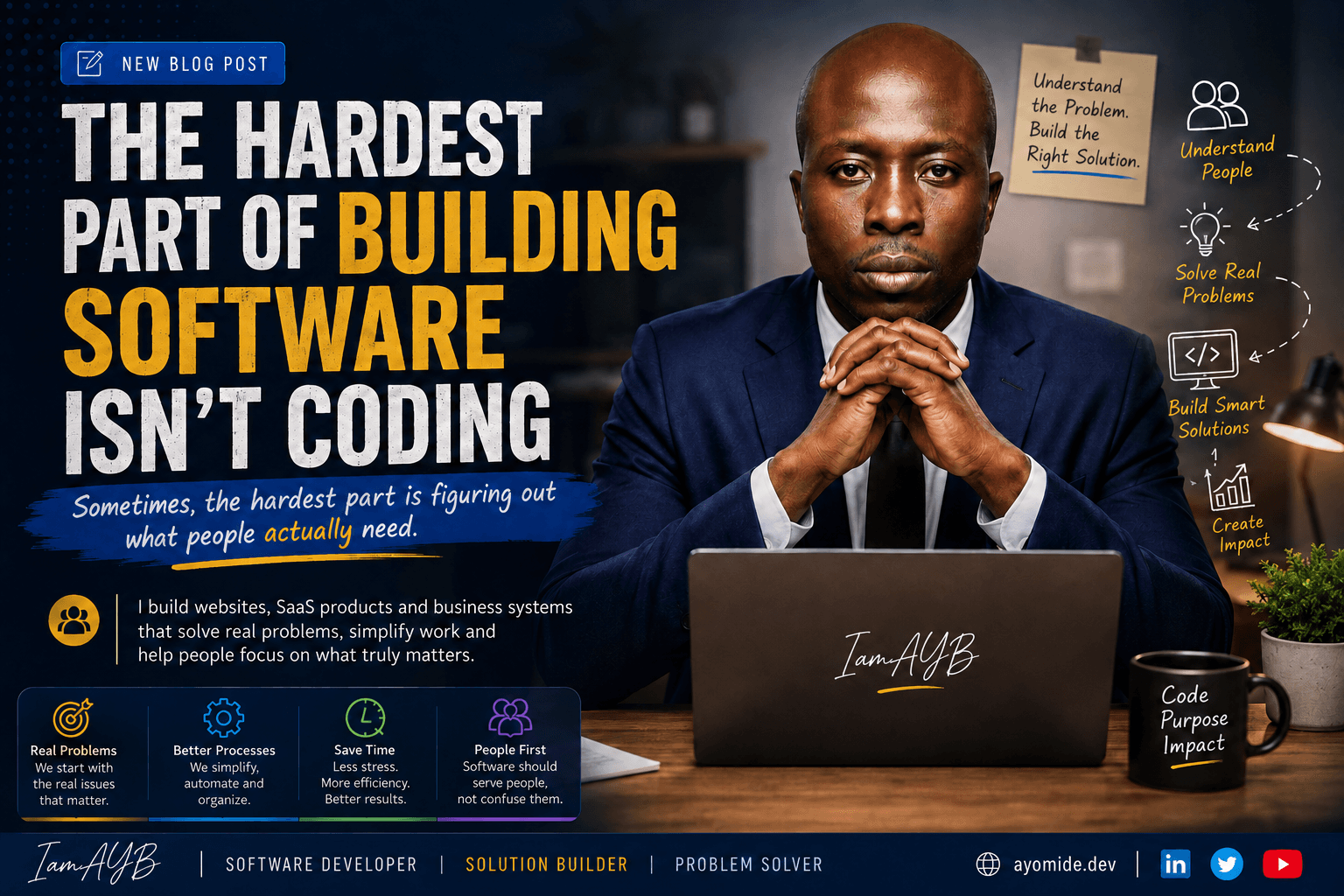
There is a difference between building software and building something people actually need. For a long time, I thought the most important part of software development was learning how to write better code. I still believe that matters. But the more I build, the more I realize that code is only part of the story.
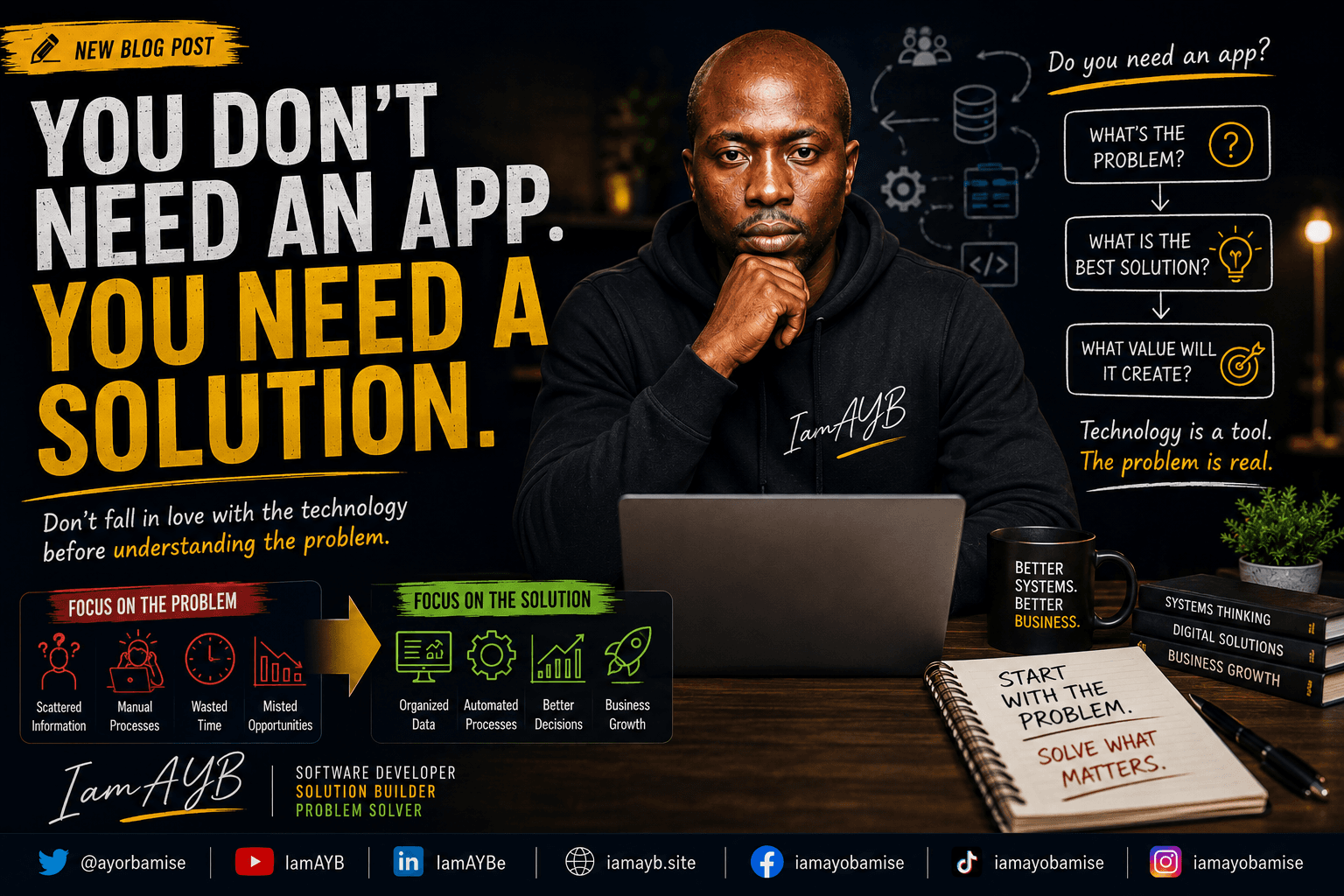
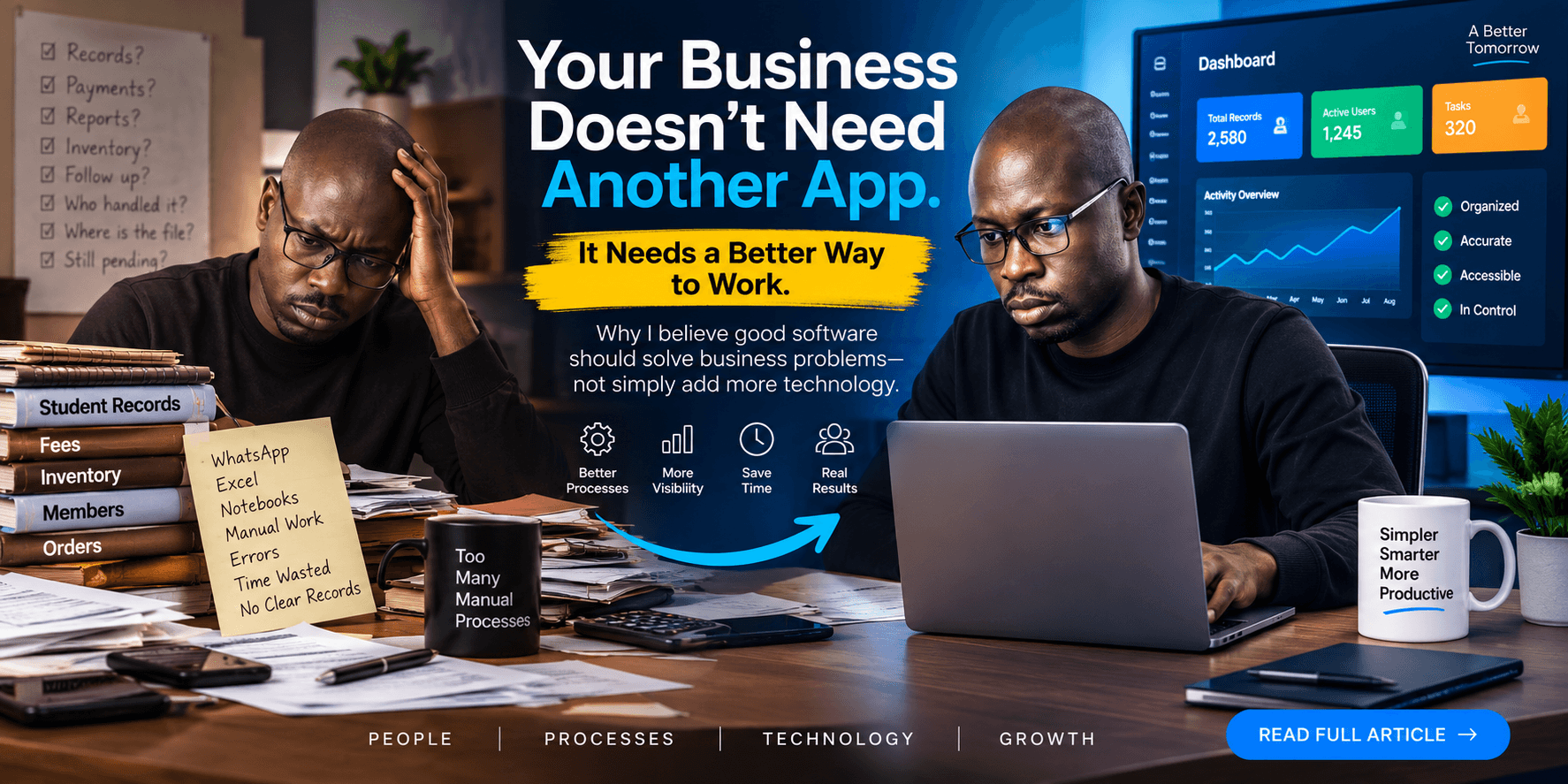
The real question is: What problem are we trying to solve? That question has gradually changed the way I approach almost every project. It Usually Starts With a Problem Some of the most interesting software ideas don't begin with someone saying, "I want an application." They begin with something much simpler. A school administrator struggling with student records.
A business owner trying to keep track of operations using several spreadsheets. An organization managing members, payments and activities through notebooks and WhatsApp messages. Someone with a business idea who knows there has to be a better way to do things but doesn't know where to start. These are the situations that interest me. Because behind every one of them is an opportunity to make someone's work easier. And that, for me, is where technology becomes meaningful.
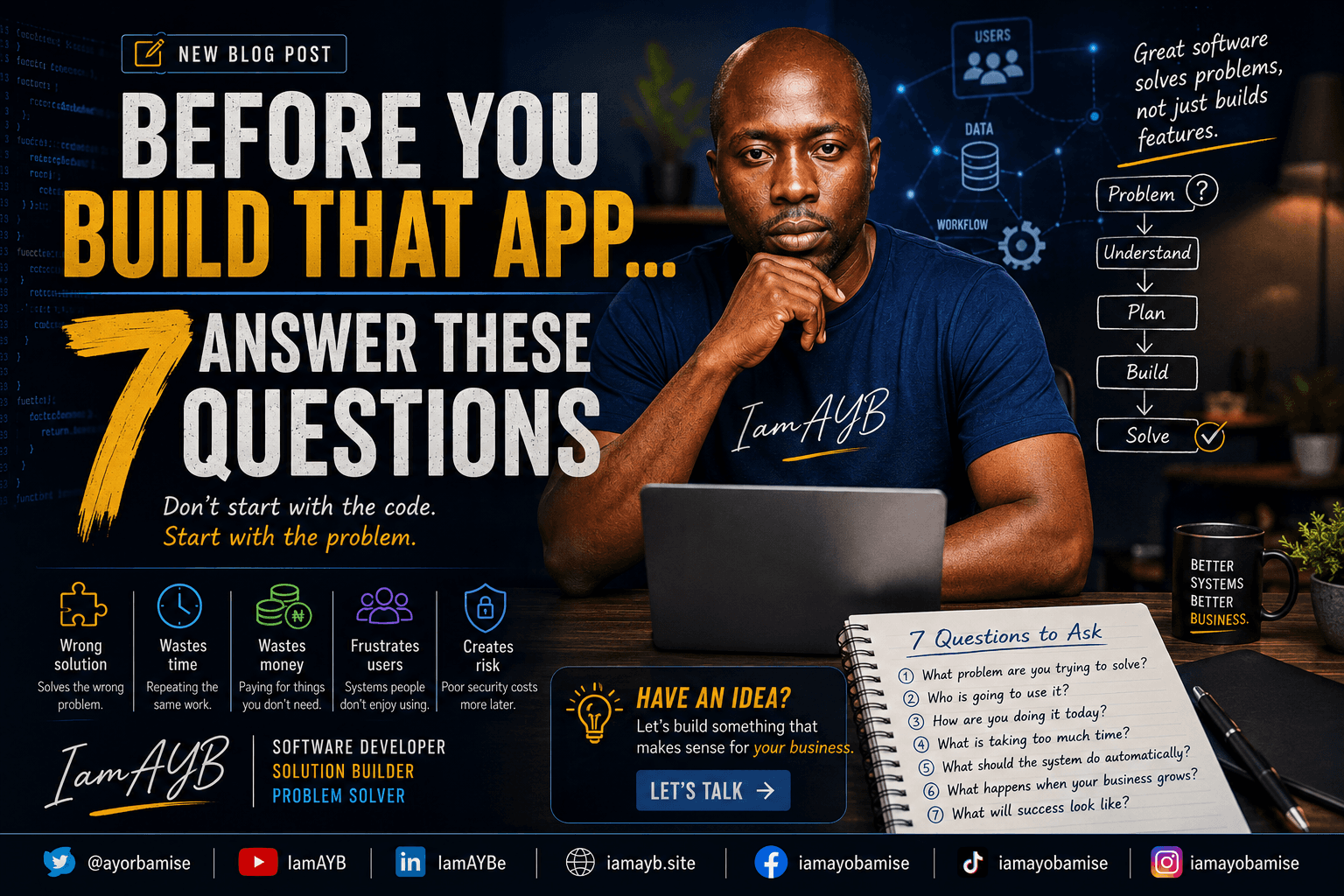
I Enjoy Turning Complicated Things Into Simpler Systems One thing I genuinely enjoy about software development is taking something that looks complicated and breaking it down. What are the people involved? What information do they need? What happens first? What happens next? Who should be able to see what? Where are mistakes happening? What is currently being done manually? What could be automated? Once you start asking these questions, an idea that initially looks confusing begins to take shape. You can start seeing the users, the workflows, the database, the screens and eventually the product itself. That process is probably one of my favourite parts of building software.
Why I've Become Interested in SaaS I've also become increasingly interested in SaaS products. Not simply because SaaS is popular, but because I like the idea of building software that solves a specific problem for a specific group of people. Instead of creating another generic application that tries to do everything, why not build something that understands one particular problem extremely well? That thinking has influenced some of the products I've been working on. I've explored ideas around school management, manufacturing, cooperatives, communities and other areas where organizations still have many processes that can be improved with technology. Some of these products are still evolving.
Some are being tested. Some are ideas that may eventually become bigger products. And that's okay. Not every idea needs to become a company overnight. Sometimes you simply need to build, learn and see where the idea takes you. Technology Is Changing Quickly There is another thing I've learned recently: You cannot afford to stop learning in technology. The tools I use today are not exactly the tools I started with. Frameworks change. Cloud platforms change. AI is changing how developers work. New libraries appear. Old approaches become outdated. Even the way we think about building software is changing. AI-assisted development, for example, has become an interesting part of my workflow.
But I don't see AI as a replacement for understanding software. If anything, it makes understanding the fundamentals even more important. You still need to know what you're building. You still need to understand architecture. You still need to think about security. You still need to understand your users. And when something breaks at 2 a.m., you still need to know how to find the problem. AI can help you move faster. But you still have to know where you're going. Building for the Nigerian Market Being a developer in Nigeria also influences how I think about software.
We have a huge market, but we also have very practical realities that software products have to deal with. Internet connectivity isn't always perfect. Businesses have different levels of digital maturity. People use WhatsApp heavily. Payment methods matter. Cost matters. Mobile devices matter. And sometimes the person using the software isn't a technical person at all. That means a product can have beautiful technology behind it and still fail if it doesn't fit the reality of its users. I don't want to build software that looks impressive only in a demonstration. I want to build software that makes sense when someone actually has to use it on a Monday morning to get work done. Good Software Should Feel Simple One of my biggest goals when building a product is simplicity. That doesn't mean the technology behind it has to be simple.
In fact, some of the most sophisticated systems can have very complicated architecture behind a very simple interface. The user doesn't need to know that. If someone wants to register a student, they should be able to register the student. If a business owner wants to check production, they should be able to see it. If a cooperative member wants to know their contribution balance, they shouldn't have to understand the database behind it. Complexity belongs in the engineering. Simplicity belongs in the experience. That's something I continue to remind myself of. I Don't Think I'm Finished Learning I don't consider myself someone who has "figured everything out." There is still a lot I want to learn.
There are technologies I haven't mastered. There are products I haven't built. There are mistakes I haven't made yet. And there are probably a few mistakes I will make along the way. But I'm comfortable with that. For me, building software is a continuous process of learning. Build something. Test it. Get it wrong. Understand why. Fix it. Build again. Every project adds another piece to the experience.