How Much Does It Really Cost to Build Software?
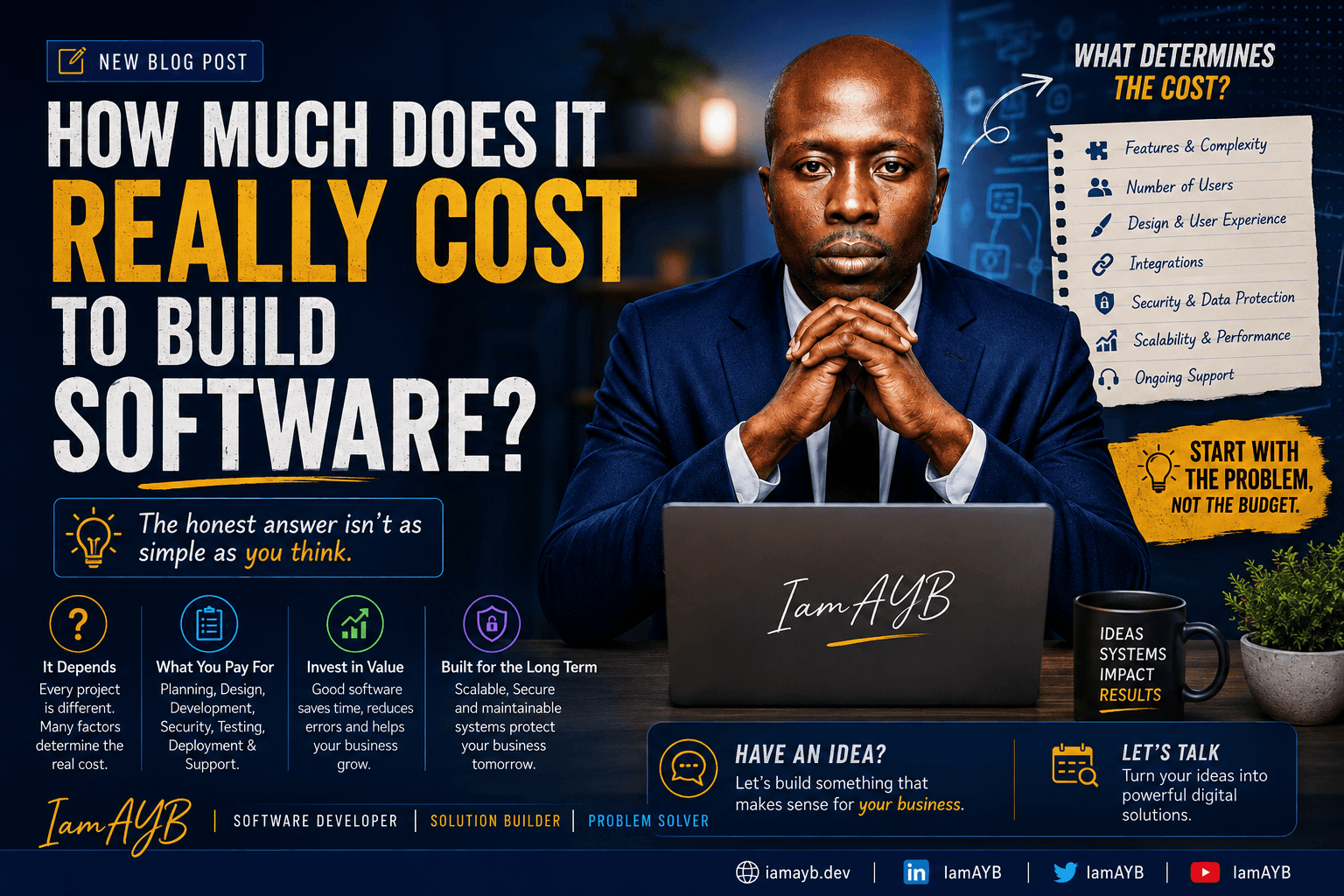
If you've ever asked a developer this question, you probably didn't like the answer: “It depends.” 😂
Let's be honest.
If you've ever approached a software developer with an idea, one of the first things you probably asked was:
“How much will it cost?”
And that's a fair question.
You have an idea.
You have a budget.
You want to know whether you can afford it before you start.
But then the developer looks at you and says:
“It depends.”
😂
And you're probably thinking:
“Depends on what? Just tell me the price!”
I understand.
I've been on both sides of conversations like this.
But after spending more time building websites, business systems and SaaS products, I've realized that giving someone a serious software price without first understanding what they want is actually irresponsible.
Let me explain why.
Software Isn't Like Buying a Phone
If you want to buy an iPhone, you can simply check the price.
You know what you're getting.
If someone asks you how much the phone costs, you don't need to ask:
“How many people will use the phone?”
😂
Software is different.
Imagine someone tells me:
“I want a school website.”
Okay.
That could mean a simple website with:
Home
About
Contact
News
Gallery
Or...
They might actually mean:
School website
Student portal
Parent portal
Teacher portal
Online admission
Result checking
School fees
Attendance
Hostel management
Transportation
SMS notifications
Online payments
Admin dashboard
Now tell me...
Are those two projects supposed to cost the same thing?
Obviously not.
And that's why I can't honestly tell you:
“A school website is ₦500,000.”
without first understanding what you actually mean by “school website.”
Sometimes People Don't Know What They Need Yet
And that's completely normal.
You don't have to be technical.
In fact, I don't expect you to be.
If you're a school owner, you're supposed to know how to run your school.
If you're running a factory, you're supposed to understand your production.
If you're running a cooperative, you're supposed to understand your members and finances.
You don't need to know React, Next.js, Supabase, APIs or database architecture.
That's my side of the conversation.
Your side is simply:
“This is what is giving me a headache.”
Tell me that.
Then we can start working backwards.
Sometimes the Problem Isn't Even Software
This is something I wish more people knew.
If you come to me and say:
“I need an app for my business.”
I'm not automatically going to say:
“Great! Let's build it.”
I may ask:
Why do you need the app?
What are you currently doing?
What isn't working?
How many people are involved?
How often does the problem happen?
What happens when something goes wrong?
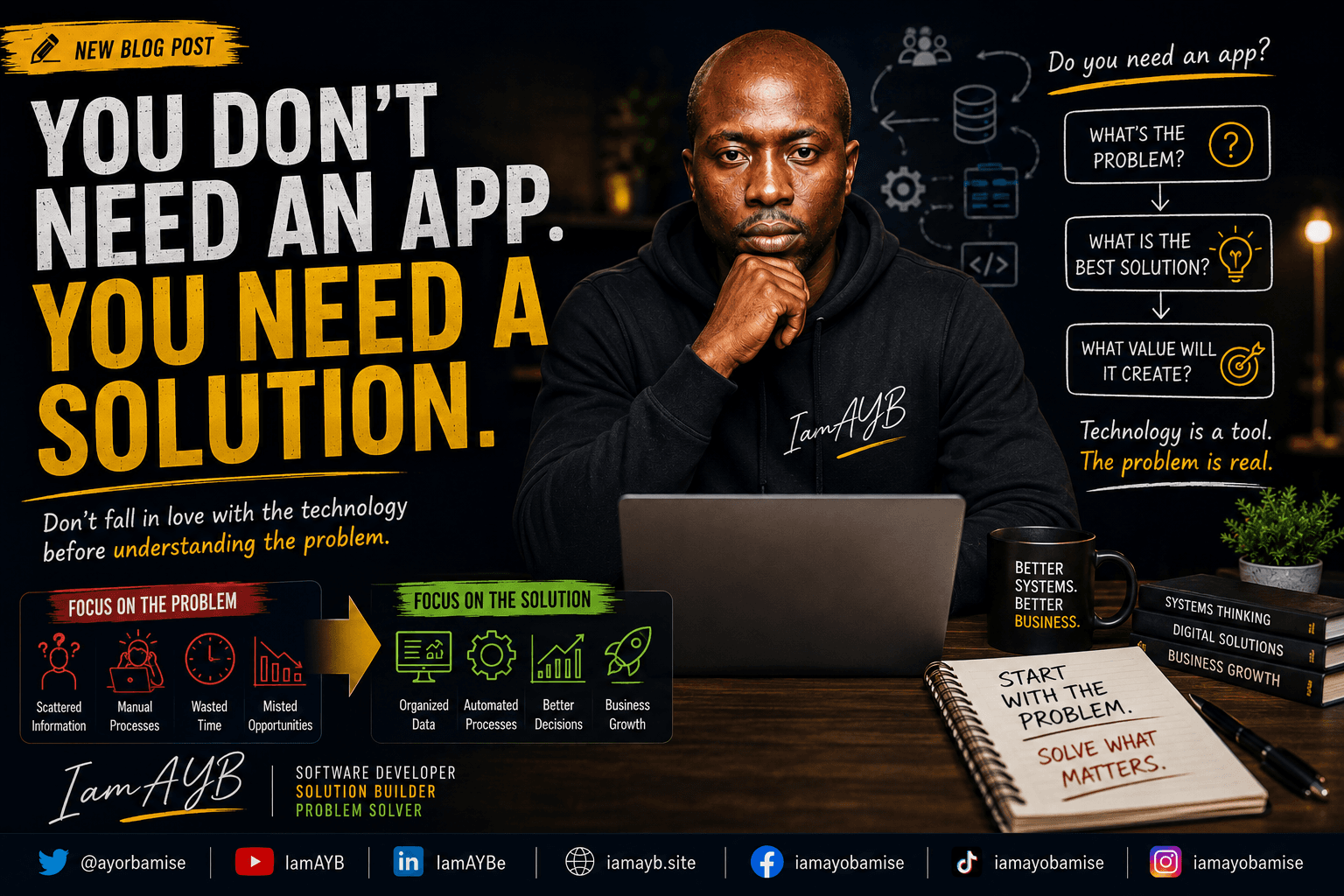
And sometimes we might discover that you don't actually need a custom application.
Maybe a properly configured existing tool will solve the problem.
Maybe you just need a better process.
Maybe you need a website rather than an application.
And yes...
Maybe you really do need custom software.
But let's find that out first.
So What Are You Actually Paying For?
This is another thing people sometimes misunderstand.
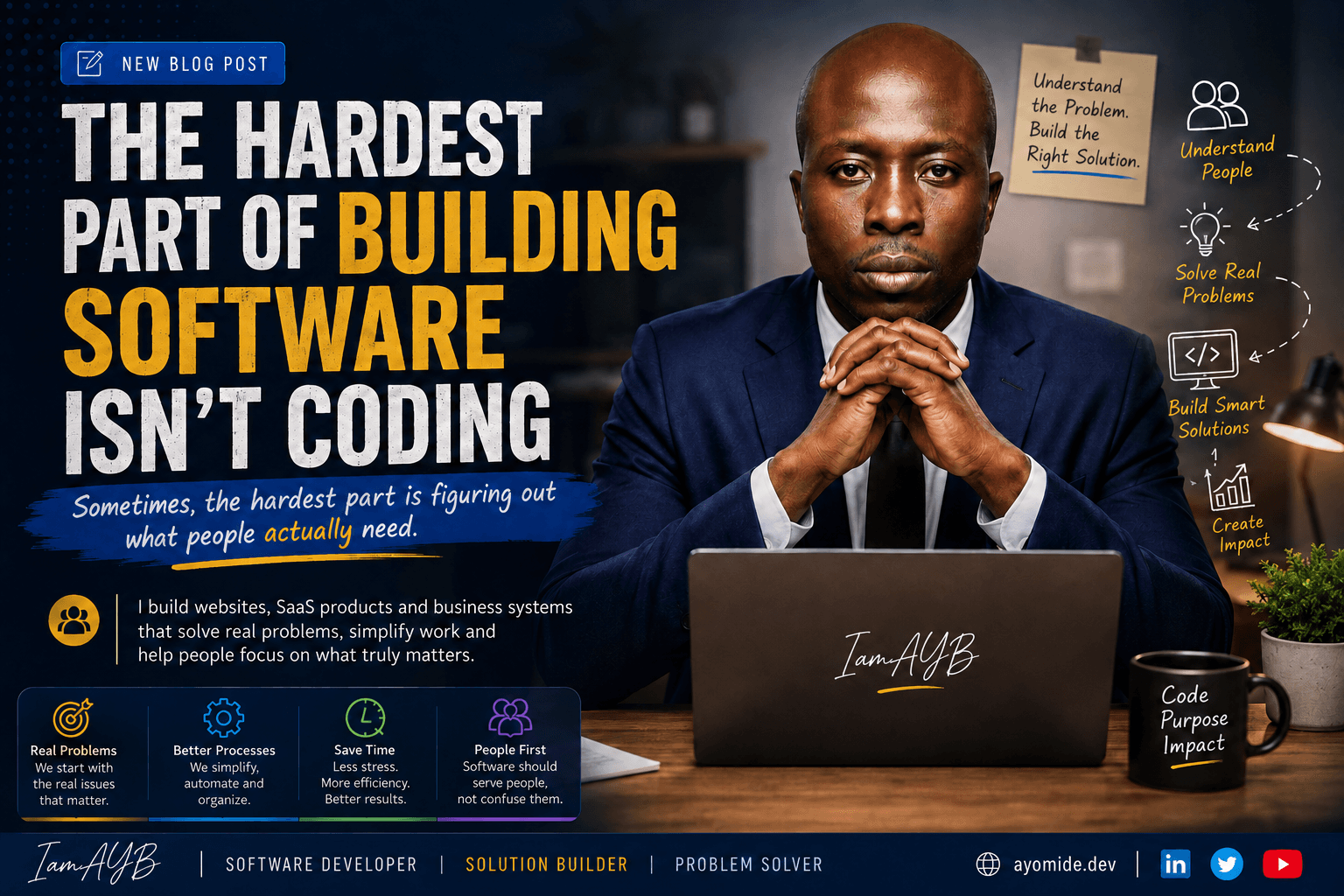
When you pay a developer to build software, you're not paying them simply because they can type code.
There's a lot happening before and after the code.
First, we need to understand the idea.
Then we think about the user experience.
Then the design.
Then the database.
Then the application itself.
Then authentication.
Then permissions.
Then security.
Then testing.
Then deployment.
Then backups.
Then maintenance.
And sometimes...
fixing the thing that worked perfectly yesterday and suddenly decided not to work today.
😂
That's software development.
The Part You See Isn't the Whole Product
You might open an application and see a beautiful dashboard.
A few cards.
Some charts.
A sidebar.
Some buttons.
It looks simple.
But behind that simple screen could be:
A database.
Authentication.
APIs.
User roles.
Security policies.
Payment systems.
File storage.
Notifications.
Reports.
Automations.
Backups.
And hundreds or thousands of lines of code.
That's one of the funny things about software.
The simpler something looks, the more work may have gone into making it feel simple.
Let's Take SmartFactory
I've talked about SmartFactory on this website before.
If you look at the interface, you might think:
“Okay, it's a factory management dashboard.”
But then you start asking questions.
Who can log in?
Can a storekeeper update stock?
Can a production manager record production?
Can an administrator change everything?
What happens when raw materials are used?
Does stock reduce automatically?
What happens when finished products are added?
Can management see reports?
Can different factories use the same platform?
What happens if the business grows?
How do we protect the data?
Suddenly, you're no longer talking about a pretty dashboard.
You're talking about a software system.
And that's where the real work is.
This Is Why I Don't Like “Cheap Software”
Let me clarify something.
I'm not saying cheap software is always bad.
And I'm not saying expensive software is always good.
There are excellent developers who charge reasonably.
There are also people who charge a lot and deliver very little.
The problem is when someone chooses software only because it is cheap.
You might get something that works today.
But what happens tomorrow?
What happens when you need another developer?
What happens when your users increase?
What happens when you discover a security problem?
What happens when you need to add a feature?
What happens when the original developer is no longer available?
That's when a cheap project can suddenly become an expensive project.
But Please Don't Let Anyone Scare You Either
I've also seen the other side.
Someone tells a small business:
“You need a ₦10 million system.”
And the business doesn't even have the problem that requires a ₦10 million system.
That's not good either.
A good developer should be able to look at your situation and say:
“You don't need all of that yet.”
Maybe you can start smaller.
Maybe you need only three important features.
Maybe we can build the first version and improve it as the business grows.
I actually prefer that approach.
Start With What Hurts Most
Let's say you're running a cooperative.
You have problems everywhere.
But the biggest headache is keeping track of members' contributions and loans.
Don't try to solve the entire universe on day one.
Let's solve that first.
Build:
Members.
Contributions.
Loans.
Repayments.
Reports.
Get people using it.
See what they like.
See what they don't like.
Then improve it.
That's much better than spending months building 100 features that nobody asked for.
This Is Why I Like MVPs
You may have heard the term MVP before.
It simply means Minimum Viable Product.
The way I explain it is:
Build the smallest version that is actually useful.
Not the smallest version that looks unfinished.
Not a broken prototype.
Something people can actually use.
Then listen.
Because your users will teach you things you didn't think about.
Someone will say:
“Why do I have to do this manually?”
And you'll think:
“Hmm... that's a good point.”
Someone else will say:
“We don't actually use this feature.”
And suddenly you realize you spent two weeks building something nobody needed.
That's part of building products.
What About AI?
This is becoming a very interesting question.
People now ask:
“If AI can write the code, why should software cost so much?”
Fair question.
And yes, AI has made development faster.
I use AI in my own workflow.
It can help me write code, debug problems, explore ideas and get through certain tasks much faster.
But there's something important to understand.
Writing code is not the same thing as building a good product.
You can ask AI to build something in one afternoon.
But who decides what it should build?
Who understands the business?
Who checks whether the logic is correct?
Who thinks about security?
Who tests it?
Who makes sure the database won't become a mess later?
Who is responsible when something goes wrong?
That's where experience still matters.
So How Much Should You Budget?
I know you're probably still waiting for me to give you a number. 😂
Here is the honest answer:
There isn't one number.
A simple website could cost one amount.
A custom business application could cost considerably more.
A proper SaaS product could require a much larger investment.
And an enterprise system can go much further.
The price depends on what we're building.
The number of users.
The features.
The complexity.
The integrations.
The security requirements.
The design.
The expected growth.
The support required.
And sometimes, the technology itself.
Here's What I Would Want to Know First
If you came to me tomorrow and said:
“Ayo, I want you to build something for me.”
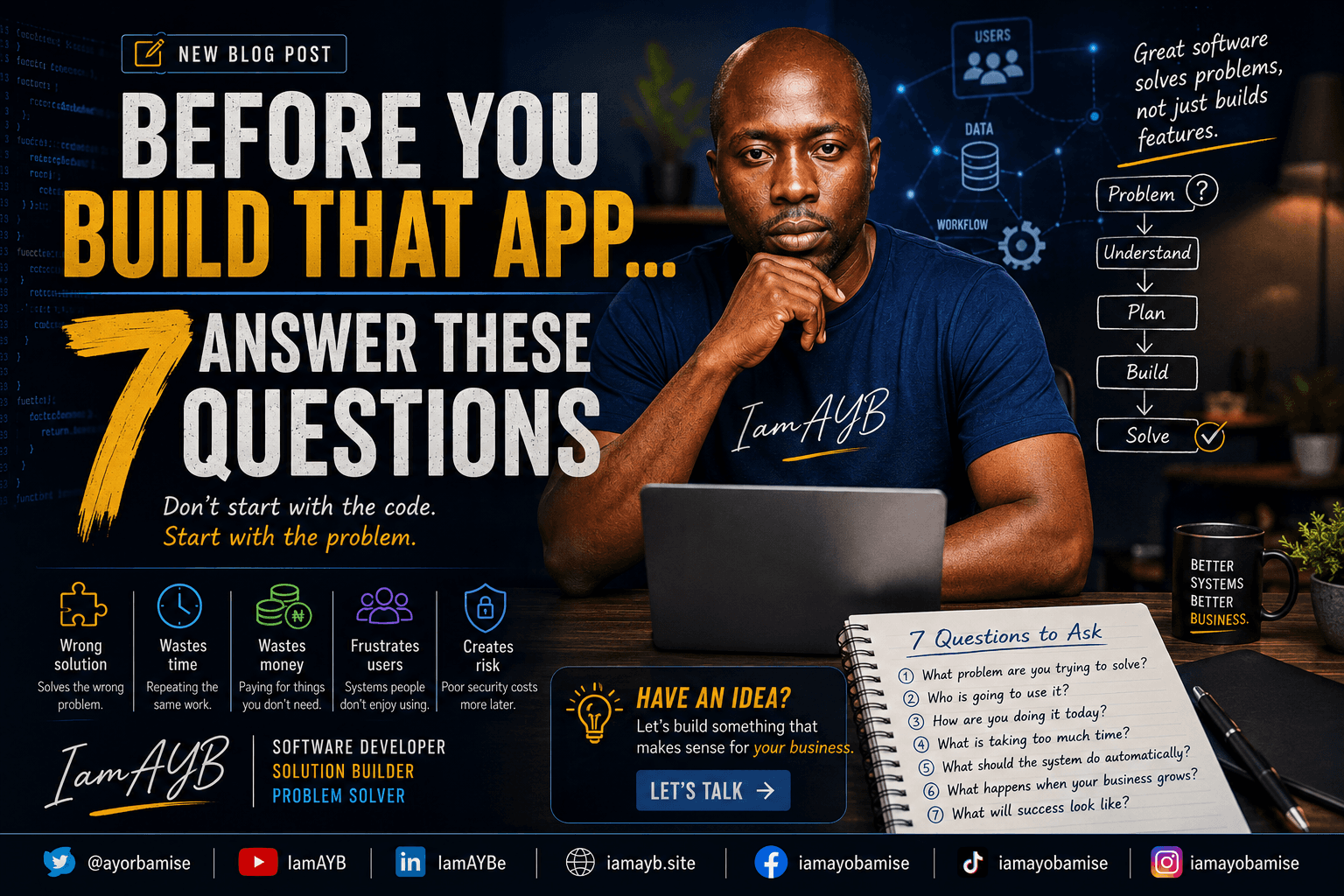
Before giving you a price, I'd probably ask:
What exactly are you trying to solve?
Who is going to use it?
How many users do you expect?
What should they be able to do?
Do you need payments?
Do you need notifications?
Do you need different user roles?
Do you need an admin dashboard?
Does it need to connect to another service?
What happens when the business grows?
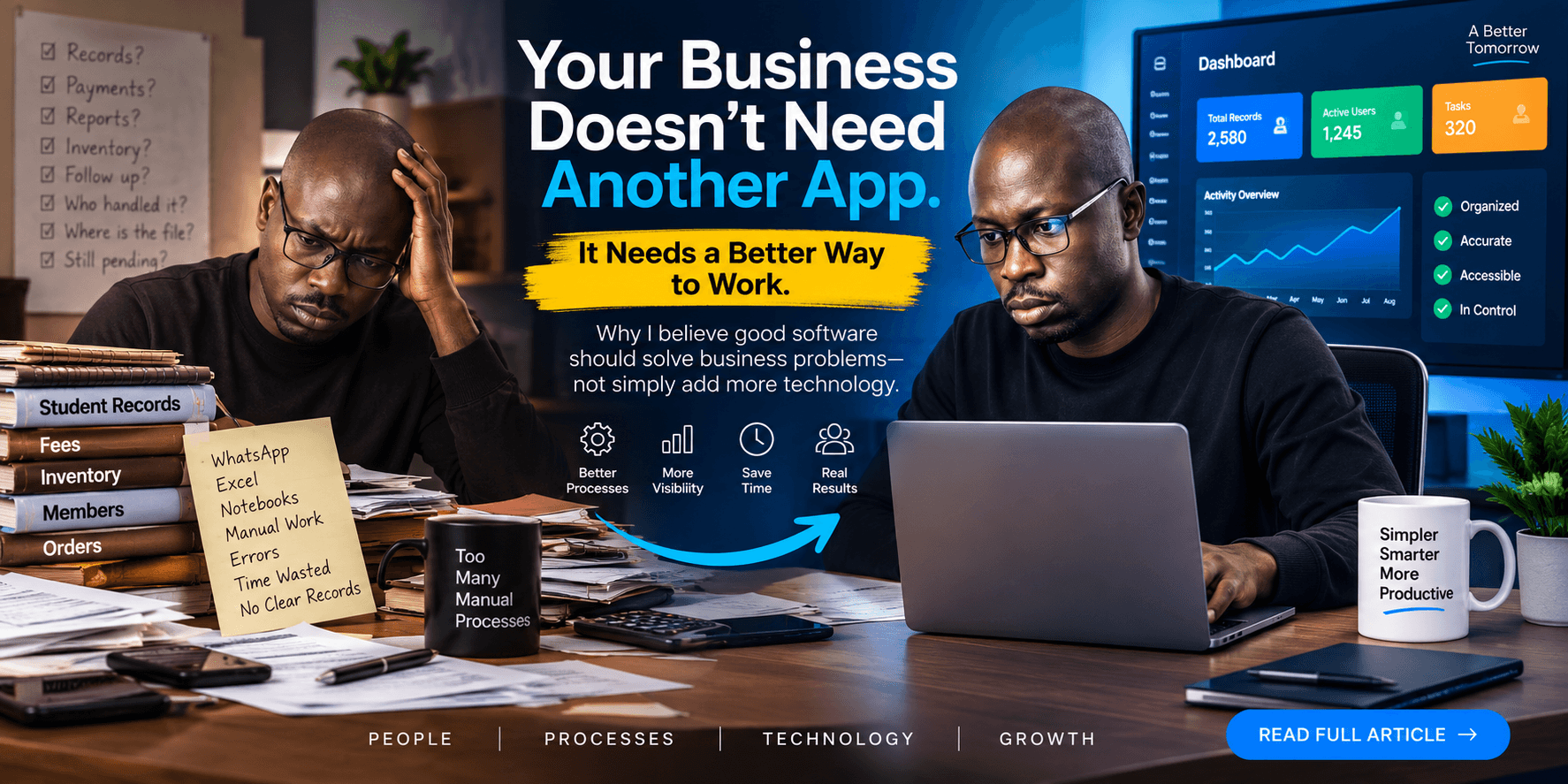
Sometimes, you need to understands that Your Business Doesn't Need Another App. It Needs a Better Way to Work.
Once I understand those things, then I can start thinking about the real work involved.
And You Should Ask Questions Too
Please don't be afraid to ask your developer questions.
Ask:
“What exactly am I paying for?”
Ask:
“Who owns the source code?”
Ask:
“Where will my data be stored?”
Ask:
“What happens after you finish?”
Ask:
“Who will maintain it?”
Ask:
“How secure is it?”
Ask:
“What happens if I want another developer to work on it?”
These are good questions.
And a serious developer shouldn't be offended by them.
You are investing money into something that may become an important part of your business.
You deserve to understand what you're buying.
Don't Compare Prices Without Comparing What You're Getting
Let's say Developer A says:
₦800,000
Developer B says:
₦2 million
Developer C says:
₦5 million
It doesn't automatically mean A is cheap, B is reasonable and C is overcharging.
Maybe A is building only the frontend.
Maybe B is building the complete system.
Maybe C is including design, security, deployment, maintenance and support.
You need to compare the scope, not just the numbers.
That's where many people make mistakes.
Software Should Be an Investment
For me, this is the most important part.
If you spend money building software and it doesn't make anything better...
Then why did you build it?
The real question shouldn't only be:
“How much did the software cost?”
Ask:
“What is the software doing for me?”
Is it saving time?
Reducing mistakes?
Helping staff?
Making information easier to find?
Improving customer service?
Helping management make decisions?
Increasing sales?
Making the business easier to manage?
If the answer is yes, then we're talking about value.
Sometimes the Cheapest Option Is Not to Build Anything
I know that sounds strange coming from a software developer.
But I'll say it again.
Sometimes the best software solution is not to build software.
If an existing tool does exactly what you need, use it.
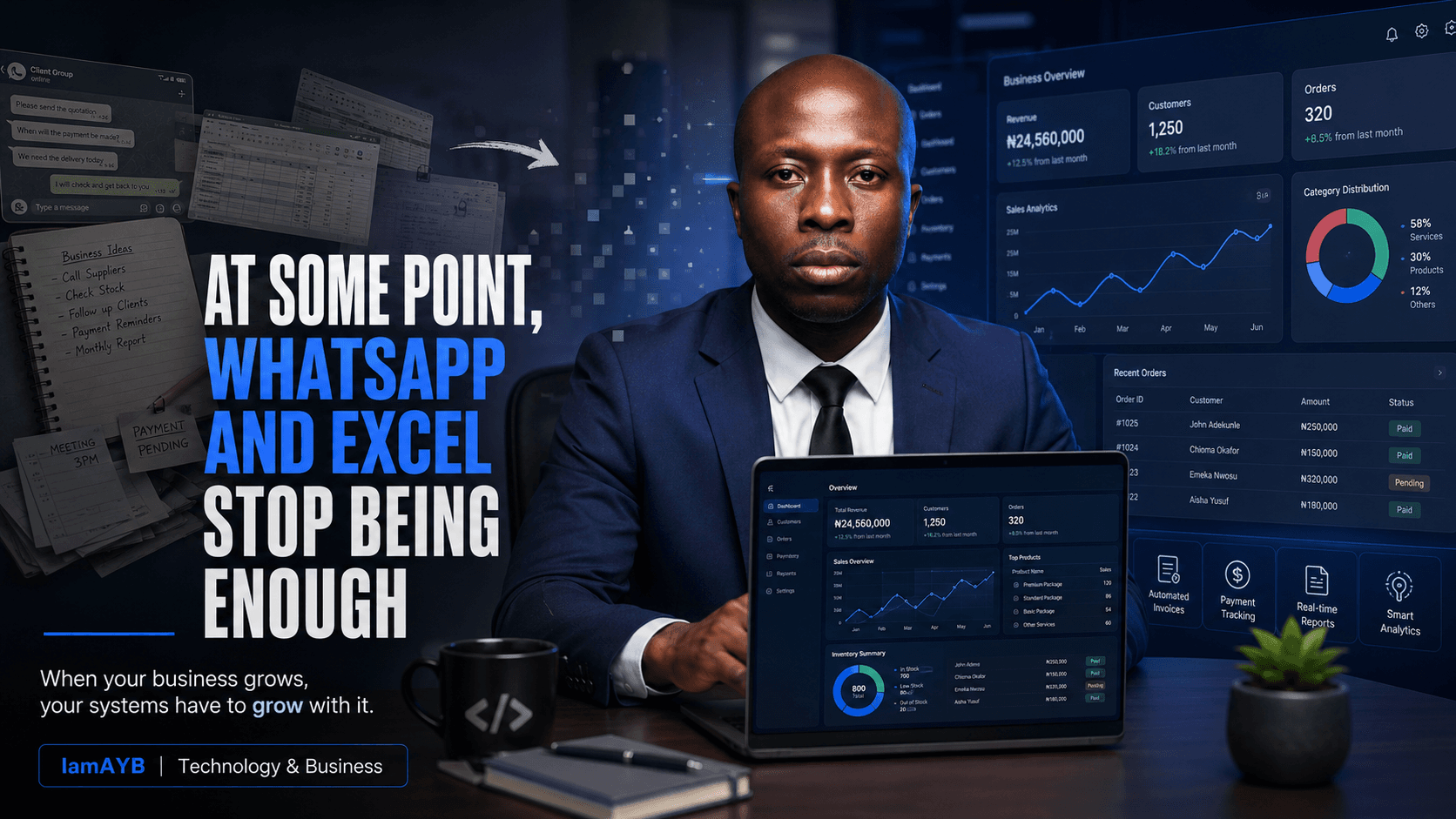
If Excel is still working, keep using it.
If WhatsApp is enough for a small part of your process, keep it.
Don't spend money just because someone told you that every modern business needs an app.
Technology should serve the business.
The business shouldn't become a slave to technology.
What I Really Want Clients to Understand
If you have an idea, don't be afraid to bring it to a developer.
You don't need to know how to build it.
You don't need to know which framework to use.
You don't need to know whether the database should be PostgreSQL or something else.
That's our job.
Just tell us:
“This is what I'm trying to achieve.”
“This is the problem I'm having.”
“This is how I'm doing it now.”
Then we can start from there.
So... How Much Does It Cost?
If you came here expecting me to say:
“Software development in Nigeria costs exactly ₦X.”
I'm sorry. 😂
It doesn't work that way.
And anyone who gives you a serious quote without first understanding what you want is probably guessing.
The better approach is:
Understand the problem.
Define the solution.
Decide what matters most.
Build what is necessary.
Test it.
Launch it.
Then improve it.
That's how I like to approach software.
Not:
“How much can I charge you?”
But:
“What will it take to solve this problem properly?”
There's a big difference.
One Last Thought
If you're thinking about building a software product right now, don't start by asking:
“How much does an app cost?”
Start by asking:
“What problem am I trying to solve?”
Then ask:
“Who has this problem?”
Then:
“What is the simplest useful solution?”
Once we know those things, the price becomes much easier to understand.
And that's really what I want my clients to know.
I'm not interested in building software simply because somebody has a budget.
I want to build something that is worth the budget.
That's the difference.
Have an Idea?
You don't need to have everything figured out.
If there's a problem you're trying to solve with technology, tell me about it.
Let's talk about the problem first.
We'll figure out the technology together.